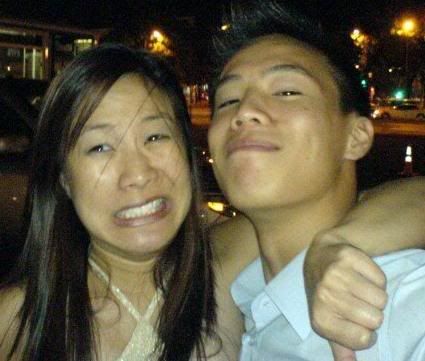
(Slightly dated, I know. But I'm trying.)
Bolivia Plot: Assassins or Victims?
By PAOLA FLORES and FRANK BAJAK – May 2, 2009
SANTA CRUZ, Bolivia (AP) — Airlifted in from Bolivia's western highlands, some two dozen elite officers in green helmets and flak jackets entered the Las Americas Hotel just before 4 a.m., disabled its surveillance cameras and stealthily made for the fourth floor. A bomb exploded. After 15 minutes of gunfire, three men were dead in their underwear on separate hotel room floors: A Bolivian-born Hungarian, an Irishman and a Romanian. Two of their comrades with ties to Croatia and Hungary were arrested in rooms down the hall.
A few hours later, President Evo Morales announced during a visit to Venezuela that an assassination plot against him, hatched by right-wing extremists and employing foreign mercenaries, had been foiled on his instructions."Before I left," he said, "I gave the order."The strange events of April 16 have only deepened political and social rifts in this nation of 10 million, where Morales, an Indian and a strident leftist, faces an intransigent foe in the light-skinned elite of this provincial capital.
Vice President Alvaro Garcia has blamed the alleged plot on "the fascist and racist right" of Santa Cruz. Morales' opponents in turn claim the government is trying to discredit them and bolster his campaign for re-election in December.The killings have also brought Bolivia to the attention of four European countries impatient for an explanation. Hungary, Ireland, Romania and Croatia have all asked for what the latter called "a full and impartial" accounting. Was it not possible to wait a few hours and capture the alleged conspirators peacefully at breakfast?"The Irish government has a legitimate right to seek the facts of how one of its citizens came to be killed by the security forces of another state," said Ireland's foreign minister, Michael Martin.
Yet more than two weeks after the raid, Bolivia has yet to provide persuasive details of the alleged conspiracy. It's a puzzle, in the words of Hungarian Foreign Minister Peter Balazs, in which the pieces don't fit.An indignant Morales at first resisted the calls for explanation. Then, at the United Nations on April 22, he said he was willing to accept an international investigation.
Such a probe would almost certainly begin with Eduardo Rozsa Flores, the only one of the slain men with clear warrior credentials.In September, he told a TV journalist in Hungary that he was returning home to organize a militia. You can only broadcast the interview, Rozsa said, if I don't return alive.
Born in Santa Cruz 49 years ago to a Hungarian father and Bolivian mother, Rozsa boasted in interviews and in a blog of serving as a translator for "Carlos the Jackal" when the Venezuelan terrorist was living in then-communist Hungary.
After the Berlin Wall fell, Rozsa became a minor celebrity in Croatia for commanding a brigade of foreign volunteers in its 1991 independence war. A poet, journalist and recent convert to Islam, he later starred as himself in "Chico," a biopic that won best film in Hungary's national cinema festival in 2002.
The other two slain men apparently lacked Rozsa's combat experience, if not his sense of adventure. So under what premise — and for what exactly — did he recruit them?Michael Dwyer was a 24-year-old Irish security guard whose family said he went to Bolivia in October looking for work. His Facebook pages show he liked to play Airsoft, a non-lethal military game like paintball where participants shoot nonmetallic pellets at each other.
Arpad Magyarosi, 29, was an ethnic Hungarian rock musician and schoolteacher from Romania who relatives said loved to travel. Neither of the men apparently told their families back home exactly what they were doing in distant Bolivia.
Authorities said Las Americas was the third four-star or better hotel in which the men had lodged.The raid's two survivors were flown to the highlands capital of La Paz and jailed without bail on terrorism charges after a closed hearing. They are Mario Tadic, a 51-year-old Bolivia-Croat comrade-in-arms of Rozsa from the Balkans, and Hungarian computer technician Elod Toaso.Bolivian Defense Minister Walker San Miguel said Rozsa recruited Toaso, 28, through the Szekler Legion, a right-wing group that promotes autonomy for Romania's ethnic Hungarians.
Hungary's ambassador, Matyas Jozsa, told The Associated Press after visiting Toaso in jail that the former bank employee may not have understood what he was getting into."My impression is that far from being a terrorist, he's fearful. Little by little he came to realize what he was involved in and that he'd made a big mistake," said Jozsa.He believes the slain men never had a chance to surrender and said Toaso saved himself by diving face-down to the floor, putting his hands on the back of his neck.
How Tadic survived is unclear. No relative has emerged, and a human rights lawyer who visited him said only that he was prepared to cooperate with authorities.The hotel's manager, Hernan Rossell, told the AP he arrived on the scene 10 minutes after the shooting ended and saw Rozsa's body on the floor, a revolver about 40 centimeters (16 inches) from his right hand, a bullet wound in his face. It was the only weapon Rossell said he saw on the fourth floor not wielded by the police, none of whom were injured in the raid.Julio Larrea, a police investigator, said the alleged mercenaries set off a C4 plastic explosives charge just before the shootout began. He said police recovered guns at the scene, though he didn't specify how many or where, except that a handgun and a silencer were found in Rozsa's room.
Authorities have offered no evidence that the slain men fired weapons. An autopsy done on Dwyer's badly decomposed body in Ireland determined he was killed by a single gunshot to the chest, but apparently little more.Many aspects of the case are still a mystery.On the day of the raid, Bolivian police confiscated about a dozen weapons at a convention center booth that they said the alleged assassins had rented through a local telecommunications company or a business fair. Prosecutor Marcelo Sosa later showed photos he said were found at the convention center booth of all the alleged mercenaries but Tadic posing with guns. In one, Dwyer has a pistol in each hand.
Police also said the men were responsible for a dynamite blast the day before at the home of the local Roman Catholic cardinal, in which nobody was hurt and minor damage incurred. They presented another man, Juan Carlos Gueder, who has been arrested on terrorism charges. Gueder told reporters he sold Rozsa a pistol, and that Rozsa said he planned to assassinate Santa Cruz's governor, Ruben Costas, to make him "a martyr."Garcia, the vice president, says the alleged mercenaries were planning to kill him and Morales, then "organize civilian groups for an armed resistance to violently seize power." Pro-autonomy groups in Bolivia are especially upset by Morales' plan to to seize fallow cropland from big landholders, many of whom are based in Santa Cruz, and "return" it to members of Bolivia's indigenous majority. However, the opposition vehemently denies involvement in any assassination plot.
The evidence authorities have provided to date is a three-minute video that Sosa says was obtained from an informant. He says it shows the three slain men lamenting missing a chance to bomb a boat on which Morales held a Cabinet meeting in Lake Titicaca in early April.The accompanying audio is unclear, however. Reporters who viewed it could make out words including "Titicaca," "wetsuit" and "explosives" but no clear narrative.
Another piece of the mystery surrounds the men's stay in Bolivia. The police investigator, Larrea, said Rozsa had taken Toasa and Tadic's passports from them so they couldn't travel.In the Sept. 8 interview where he laid out his plan to form a militia in Bolivia, Rozsa told Hungarian television anchor Andras Kepes that he intended to sneak in through Brazil. He said he was going not as an agitator, but as a defender."I have been called to organize the defense of the city and province of Santa Cruz," he said. "This isn't about me going to the Bolivian jungle to play Che Guevara." Guevara, a hero of Cuba's revolution, was executed in Bolivia in 1967 after failing to launch a communist uprising.
Rozsa insisted his mission was not "to attack La Paz or to help organize an attack on the capital and to drive away the president." Kepes said the videotaped interview could be considered Rozsa's "last will and testament."But more could be coming. Bolivian authorities seized five laptops in the raid.In the movie "Chico," playing himself, Rozsa quotes the 19th-century Cuban independence leader and poet Jose Marti in explaining to a Croat military officer why he's enlisting in another nation's fight."It's criminal to promote a war that can be avoided," he says, "and it is also criminal not to support a war that is inevitable."
Associated Press writers Carlos Valdez in La Paz, Pablo Gorondi in Budapest, Hungary, Alison Mutler in Bucharest, Romania, Snjezana Vukic in Zagreb, Croatia, and Shawn Pogatchnik in Dublin, Ireland, contributed to this report. Bajak reported from Bogota, Colombia.
Tuesday, June 16, 2009


Monday, June 1, 2009
Changing the World, One Grandma at a Time
"Most of the things we try to accomplish in the Peace Corps go flying off the roof of the bus; in the end you're lucky if the thing rolls into the station at all. More than likely however you will end up sitting on the side of the road while the drunk busdriver tries to rig a new tire out of an old pair of socks and a cigarette filter. You hardly ever get where you wanted to go, but hey- in the end you're sitting on the side of the road enjoying a very nice sunset chatting it up with someone's grandma. And I personally would rather change the world one grandma at a time. "
~Britta Lilley Hansen, Returned Peace Corps Volunteer
~Britta Lilley Hansen, Returned Peace Corps Volunteer
Friday, May 22, 2009
Weddings and Babies and Puppies and More

Mbaa. That’s the word for “mom” in Mandinka. That’s what I call my host mother here. In the beginning I was a bit apprehensive and uncomfortable using that title with her. To me, it is a title bestowed solely upon the woman who raised and nurtured me. The woman who rubbed medicated oil on my stomach when I was sick, who tried to make me pretty for my first-grade class photo by putting my hair in braids but forgot I would run around too much at recess and end up looking like a disheveled nutcase by the time the camera flashed in my face. The woman who calls and gets so excited to hear about the new country, new foods, new clothes, new boyfriend, and new life I now have all the way in West Africa.
Though she is not my real mom, Mbaa is a pretty good substitute. She owns a fabric shop and dresses so beautifully that I feel like an African queen is entering the room each night she returns home and throws open the curtain door with a flourish. She speaks only Mandinka and delights at every new sentence I put together. My first week in site she asked me which fabric I liked best in her shop and then took it to make a new outfit for me to wear to meet her parents, since she wanted me to make a good impression in my “African Dress.”
Mbaa treats me as one of her own, as best she can, and with that comes the unavoidable conversations about my marital status. She was so excited to meet my boyfriend Matt, or Lamin, as they know him here. She wants to know if I will marry him. She wants to know whether I want her plot of land next door so once Lamin and I are married, we can build our own compound here in the Gambia and be Mbaa’s neighbors. She asked me if she could throw a naming ceremony for my firstborn, and if Lamin and I would name the child after her. I told her “Mundow” was too difficult a name. She told me not to worry, her real name is Hawa.
Once we settled on that, I regrettably had to inform her that the birth of my first child would probably not be in the Gambia, and that I would probably not be present for the naming ceremony. “EHHHH!” she told me. Not a problem. Just let her know when the child is born and she would have a tiny little outfit made and sent to America so I could have a proper Gambian naming ceremony there, while she threw one here, in my honor.
I must admit, I'm a little flattered. I think I'm getting this integration thing down. That little exchange above, as you can imagine, has to be one of the most tedious conversations ever! Not for me, but for Mbaa. Imagine the patience required to have some strange visitor sitting on your couch, not understanding what you say, repeating each phrase out of your mouth in her own version of three-year-old Mandinka. Then each time this pale-skinned girl who glows in the dark interprets incorrectly, you have to try to speak slower, with simpler words so that maybe she can figure out what the conversation is even about.
I always have to give this woman credit. She certainly does try. I don’t know if I would have the same patience. I am the first Peace Corps volunteer living with her family so much of the time she does not know what to make of me or what to do with me, I am just so strange. But isn't that what it's about? Uncomfortable silences that stretch so long they become comfortable. Weird exchanges that take place so often they become normal. It's all part and parcel of volunteer life.
At any rate, in the event that I for some reason decide I will take her up on the offer, I got a glimpse of what a wedding in the Gambia would look like. The following are photos from my host cousin Adama’s wedding. I am still puzzled at why almost all of the 1000 attendants were women. Equally puzzling was the fact that I never did identify the groom. And the unveiling of a new bedroom set in the middle of the compound was later explained to be a part of the dowry, a gift from the groom to my host mom. Though I still don’t understand that either, since she is technically the bride’s aunt, not her mother. I guess some things in this life just can’t be explained.
I always have to give this woman credit. She certainly does try. I don’t know if I would have the same patience. I am the first Peace Corps volunteer living with her family so much of the time she does not know what to make of me or what to do with me, I am just so strange. But isn't that what it's about? Uncomfortable silences that stretch so long they become comfortable. Weird exchanges that take place so often they become normal. It's all part and parcel of volunteer life.
At any rate, in the event that I for some reason decide I will take her up on the offer, I got a glimpse of what a wedding in the Gambia would look like. The following are photos from my host cousin Adama’s wedding. I am still puzzled at why almost all of the 1000 attendants were women. Equally puzzling was the fact that I never did identify the groom. And the unveiling of a new bedroom set in the middle of the compound was later explained to be a part of the dowry, a gift from the groom to my host mom. Though I still don’t understand that either, since she is technically the bride’s aunt, not her mother. I guess some things in this life just can’t be explained.
 Over 1000 people showed up for the wedding. Speakers stacked right outside my door. Partying stopped at 2 in the morn. Rather early, actually.
Drums. Dancing. Drums and dancing.
 African Dance Queen teaching me how to dance.
Asian-American Dance Queen turning it back around on them!

Kids in their matching outfits, known as "asobees." You dress according to your age group. Mine consists of many women with infants and toddlers. Apparently I missed the boat.
 The older lady asobees.
 Where's Waldo? I mean, Kaddy.


Kids in their matching outfits, known as "asobees." You dress according to your age group. Mine consists of many women with infants and toddlers. Apparently I missed the boat.
 The older lady asobees.
 Where's Waldo? I mean, Kaddy.
 Hint: She glows in the dark. (They actually told me I did.)

My host bro Lamin with my host niece Sally. I loved her outfit and wanted to get it copied. Then I realized I would be dressing like a two-year-old.
 Host sis Asa who thinks I am hilarious. She was once in a near death state with malaria when I came in the house. I didn't realize she was sick she was so animated. Then she told me it was only because I was so funny she couldn't help but laugh and forget she was sick. She got well again soon. Apparently malaria is not always fatal. Whew.
 The bridal party. Or so I assumed. The third girl in with the Macy Gray hair is my sister Rohey, Sally's mom.

Bride on the left, Rohey on the right. Look guys, one day that could be me!
 Host sis Asa who thinks I am hilarious. She was once in a near death state with malaria when I came in the house. I didn't realize she was sick she was so animated. Then she told me it was only because I was so funny she couldn't help but laugh and forget she was sick. She got well again soon. Apparently malaria is not always fatal. Whew.
 The bridal party. Or so I assumed. The third girl in with the Macy Gray hair is my sister Rohey, Sally's mom.
Bride on the left, Rohey on the right. Look guys, one day that could be me!
I'm So Out Of My Element I'm In It.
 Skin fungus. Parasites. Flies that hatch from your body. Relentless harassment. Language barriers. Children chasing after you. Rocks flung as you ride your bike. Faces peeping through doors and windows to glimpse the Toubab. Latrines and bucket baths. The same conversation over and over and OVER. Hiding in the hut because you are so overwhelmed and just wish for one second, just ONE second, that you could be in a world with McDonalds and Chinese buffets and supermarkets and hot showers.
All that in mind, does one have to be absolutely crazy, absolutely mad to choose this lifestyle? Of course every one wants to know (at times, myself included), why do I do Peace Corps? How could I have transferred knowing what it’s like? How do I get by and continue on and most of all, how could I love it?
Really, this is a very difficult question to answer. You know when a friend tells you about something funny that happened and you don’t really laugh, and they finish lamely with a “Guess you just had to be there?” Sometimes I feel that’s what Peace Corps is like. It’s not something that can necessarily be explained, it’s something that must be lived and felt. Howe
 ver, because I do want to impart to you why I continue to do what I do, I will describe it the best I can.
My journey with Peace Corps actually started back in second semester of my junior year in college. At that time I decided that in order to land my dream job with P&G, I really needed to have some international experience on my resume. The quickest and easiest route was to do a trip over spring break, and so that’s what I did. I heard about the Timmy Foundation through a friend and learned that there would be a building brigade going to Honduras. I signed up and went. I had always heard that these trips could be “life-changing experiences.” I wasn’t really interested in all that. I just wanted to go abroad in the most painless way possible.
Too bad I met one of the most beautiful souls on earth during that trip. Too bad he inspired me to the point that I hastily changed school plans in order to study abroad first semester the following year. Too bad I went back to Honduras that next year with near-fluent Spanish and realized just what an impact I had made on Walter, and Walter had made on me, and how that one relationship could be generalized across so many other relationships with the children I met at this all-boys school/farm/orphanage.

It’s hard to put in words what happened there, but the best that I can describe it, at the risk of sounding insanely cheesy, is that it was an experience that made my heart and soul sing. Honduras was the first time I felt it; Peace Corps Bolivia was the first time I lived it.
Peace Corps is not only about providing technical assistance, it also focuses on cultural exchange. That is one thing that differentiates this organization from other aid organizations and NGO’s. Aside from the fact that volunteers are paid only what the average host country national earns (meaning that we often rely on hand-me-down clothing from exiting volunteers, regularly wear shirts dotted with holes and pants that have obviously seen better days, bargain with anyone and everyone, and count each and every penny- dalasi actually- before stepping foot into a “regular” restaurant), volunteers can easily be distinguished from other Toubabs by their level of cultural integration.

In other words, we speak local languages and observe the traditions and customs of the people around us. We don’t get to live in the nicest areas of town, drive around in air-conditioned cars, or hang out exclusively with other ex-pats. We do, however, sit in overcrowded vehicles with crying babies placed into our laps whether we know the child or not. We hitchhike. We live in small communities and rural villages where we have to try as best we can to communicate with those around us.
It’s that cultural exchange that keeps me coming back for more. One week in Honduras, one month in Vietnam, one semester in Costa Rica, one year in Bolivia. Each time I go abroad and immerse myself in the life and language of people so different from myself I walk away with a greater understanding of not just who they are, but who I am. It provides a higher level of awareness and insight that I would struggle to achieve while in the U.S. And it would take ten times longer, if it happened at all.
Once I discovered how much joy I gained from going and out and seeing what the world has to offer, and what I can offer to the world, I just didn’t want to miss out. Extreme hunger pains aside, despite hot weather an
 d crowded, unpredictable, sweaty transport, I must admit that when my little host brother walks in my hut each morning grinning his little smile with the missing two front teeth, I can’t help but smile right back.
Ultimately, Peace Corps reminds me that life should be lived. It should make you laugh. It can make you cry. It should make you learn and grow. It surprises you. It frustrates, it puzzles, it delights. It shows that even with the different languages and cultures, customs and religions, the different levels of wealth and education, there are common threads that link us all and at the end of the day we really can sit down and brew a cup of attaya tea and chat. We have so much to share and to gain from one another.
Whether it be with random strangers or with the host family, I think that on both sides, the impressions made will last a lifetime. I took the dive into Peace Corps and day in and day out, I find myself in situations where I’m so out of my element, I’m in it. And though sometimes I would die for a Big-Mac, I wouldn’t trade it for the world.
Friday, May 8, 2009
The Real Deal
Straight from the source, check out real Peace Corps life.
http://www.youtube.com/watch?v=cMI-tsTLVcw
(This guy also happens to be my love interest. Whatcha think 'bout THAT?)
http://www.youtube.com/watch?v=cMI-tsTLVcw
(This guy also happens to be my love interest. Whatcha think 'bout THAT?)
Wednesday, May 6, 2009
All in a Day's Work
Survey Responses: Britta Hansen (aka The Greatest Sitemate in the WORLD!)
1. Who are you and how did you find my blog?
Hey Tammers Its Britta. I found YOU one day walking around Samaipata. ME-"Hmmm I wonder who that Asian chick is over by Amboro tours... no she couldn't be PeaceCorps, those pants are way to to hot and ummm, are those highlights in her hair... Definitely not PeaceCorps." You- "O my god, who is that dirty hippie with those nasty stinky chacos, yuck, oh god i hope shes not in PeaceCorps too. What would we talk about..." Us, two days later "Holy shit you are the funniest person ever, oh my god I cant believe we just ate so many pancakes!" Thats how i met you, fell in love and found your blog!
2. What were you in the middle of doing just now? (If it was eating a McDonald’s cheeseburger and fries, OMG AM I JEALOUS!!!).
I was just posting some photos on FB from a totally fun weekend up at Lusten, Old friends good times. And i thought i would check out if anything new was going on with you.
3. What burning question do you have for me that I have not yet answered?
I want to know... a day in the life... do a post about just an average day in your life..."got up at bla bla ate rice with hot shit on it, had lots of latrine time, Thank god for the newsweeks..." you know all the little stuff you do each day.
4. How many times have you laughed, cried, and/or thrown up as you have read my blog?
I have totally cried, sorry its true, i miss you and honestly im a bit jealous that you are doing all this way badass cool fun stuff in AFRICA no less, and here i am driving my ass down 94 everymorning at 730 to go to work with the rest of the shmucks. I have laughed too, and worried about your poor little stomach.
5. What is the best/worst/funniest recent moment in your life for which I have been absent?
Oh so many moments you have missed, like a fun evening at the VFW on Hennepin, whoa. The rest of Bolivia. We will have time to make many more memories.
6. And last of all, what do you miss most about me???
Again so much i miss about you, I miss your gate with the ants marching across the top, and your little garden that could, i miss staying up late and talking about boys, and eating Kilos brownies, you teaching me how to be a lady, and me teaching you how to set up a tent and that a head lamp can be used for more than a reading light! Mostly i miss your beautiful face and smile, and the way you make me laugh and think about the world... now im crying again... Im so happy for you and i will try to skype call you as soon as i can.
A Day in the Life.
Señora, this one's for you!!!
I awaken to the sound of crowing roosters outside my door, the squeak of the well wheel as water is drawn, and the shouting from a wide awake host family who has been up since the dawn prayer call.


Manual labor, backbreaking labor, more manual labor. That's what gardening here is all about.


 Sweet success.


Destination: Paradise Beach. And in tribute to those who did, those who are, and those who wish they still were, I go on livin' the dream. Just livin' the dream......

1. Who are you and how did you find my blog?
Hey Tammers Its Britta. I found YOU one day walking around Samaipata. ME-"Hmmm I wonder who that Asian chick is over by Amboro tours... no she couldn't be PeaceCorps, those pants are way to to hot and ummm, are those highlights in her hair... Definitely not PeaceCorps." You- "O my god, who is that dirty hippie with those nasty stinky chacos, yuck, oh god i hope shes not in PeaceCorps too. What would we talk about..." Us, two days later "Holy shit you are the funniest person ever, oh my god I cant believe we just ate so many pancakes!" Thats how i met you, fell in love and found your blog!
2. What were you in the middle of doing just now? (If it was eating a McDonald’s cheeseburger and fries, OMG AM I JEALOUS!!!).
I was just posting some photos on FB from a totally fun weekend up at Lusten, Old friends good times. And i thought i would check out if anything new was going on with you.
3. What burning question do you have for me that I have not yet answered?
I want to know... a day in the life... do a post about just an average day in your life..."got up at bla bla ate rice with hot shit on it, had lots of latrine time, Thank god for the newsweeks..." you know all the little stuff you do each day.
4. How many times have you laughed, cried, and/or thrown up as you have read my blog?
I have totally cried, sorry its true, i miss you and honestly im a bit jealous that you are doing all this way badass cool fun stuff in AFRICA no less, and here i am driving my ass down 94 everymorning at 730 to go to work with the rest of the shmucks. I have laughed too, and worried about your poor little stomach.
5. What is the best/worst/funniest recent moment in your life for which I have been absent?
Oh so many moments you have missed, like a fun evening at the VFW on Hennepin, whoa. The rest of Bolivia. We will have time to make many more memories.
6. And last of all, what do you miss most about me???
Again so much i miss about you, I miss your gate with the ants marching across the top, and your little garden that could, i miss staying up late and talking about boys, and eating Kilos brownies, you teaching me how to be a lady, and me teaching you how to set up a tent and that a head lamp can be used for more than a reading light! Mostly i miss your beautiful face and smile, and the way you make me laugh and think about the world... now im crying again... Im so happy for you and i will try to skype call you as soon as i can.
A Day in the Life.
Señora, this one's for you!!!
I awaken to the sound of crowing roosters outside my door, the squeak of the well wheel as water is drawn, and the shouting from a wide awake host family who has been up since the dawn prayer call.

Next, pit stop at the pit latrine. That little block in the background? My shower.
The two sweet little host family kids, Sally and Njaka, check up on me each morning. They do things like take one bite of a cashew apple, just one, and leave the rest neatly on my table and hope I don't notice.
After a breakfast of sugary tea and bread with unsalted butter, I strap on my Peace Corps standard issue helmet and head out to work at the women's garden.
There are about 300 women in this 12 hectare garden, with 300 more to join soon. I was recently named to the board of directors. This consists of endless meetings to determine rules and bylaws, a lot of screaming in Mandinka that I don't understand, exhaustion, frustration, yet the tiniest glimmer of hope that we might be getting somewhere.
These women are working on a vegetable production trial that I headed up. It was my first effort in which I ran the show. And I think they understood maybe 10% of what I said. But we got it done!
Manual labor, backbreaking labor, more manual labor. That's what gardening here is all about.
Around 1:00 I head home for lunch. The bike ride home includes children screaming "HELLO! GIVE ME PEN! GIVE ME MINTY!" And from the ones that know me, "KADDYYYY BOJANGGGG!!!!" Also there are the cops who harass me and try to pull me over, on my bike no less. The alleged infraction? Not saying hello. The real reason? To ask if I will marry them. To which I respond to with a tongue lashing in Mandinka, at which time they decide I would probably be too much trouble as a second wife.
Home for lunch. Everyday, rice & sauce. Leaf sauce, peanut sauce, ground up fish in sauce...
After lunch, back to work. The family has a 12-year-old maid. I hate making her wash clothes. But so far I can handle only washing the unmentionables, since hauling water is hard work. And I have a lot of garden plots to care for.

Carrying that water back G-style baby!
It's kinda hot here. (Time is inaccurate. It's about 2:00 by now. I bought a satellite clock that only works in the U.S. It is so confused here.)
Washing and washing. Wish I had that nice little running tap I had in the old country.
My clothesline, in the bath area, tied to a fence made of coos stalk that I had to paint with motor oil to prevent complete consumption and destruction by termites. But not before they had eaten enough that people can kinda peek through.
more garden plots. You first double dig to allow aeration. Then add leaves for nitrogen and soil improvement. Then add manure that I collect for half an hour a day with a shovel and a bucket by jumping my wall to get next door.
They call me an ag-fo supastar. I no longer have a little garden that could. These days, my little garden ROCKS IT!
But even supastars get tired. Break!
Breaktime is cashew hunting time. Quite the delicacy. They are delicious, provide tons of vitamin C, and replenish a dehydrated body. Yum.
Tossing rocks to knock down a cashew. My aim sucks. I toss about 15 to knock down one.
Sweet success.Done with work for the day. I live near the beach, better APROVECHAR!
Kids chasing. They like to try to catch the Toubab. Remember the staging videos where volunteers have rocks flung at them by the native children? It's no joke...
Sand.....
Cows....
Gardens...
A quick 10 min ride and I arrive at the beach, a little thirsty. Eight cents later, problem solved.
Destination: Paradise Beach. And in tribute to those who did, those who are, and those who wish they still were, I go on livin' the dream. Just livin' the dream......
Subscribe to:
Posts (Atom)